




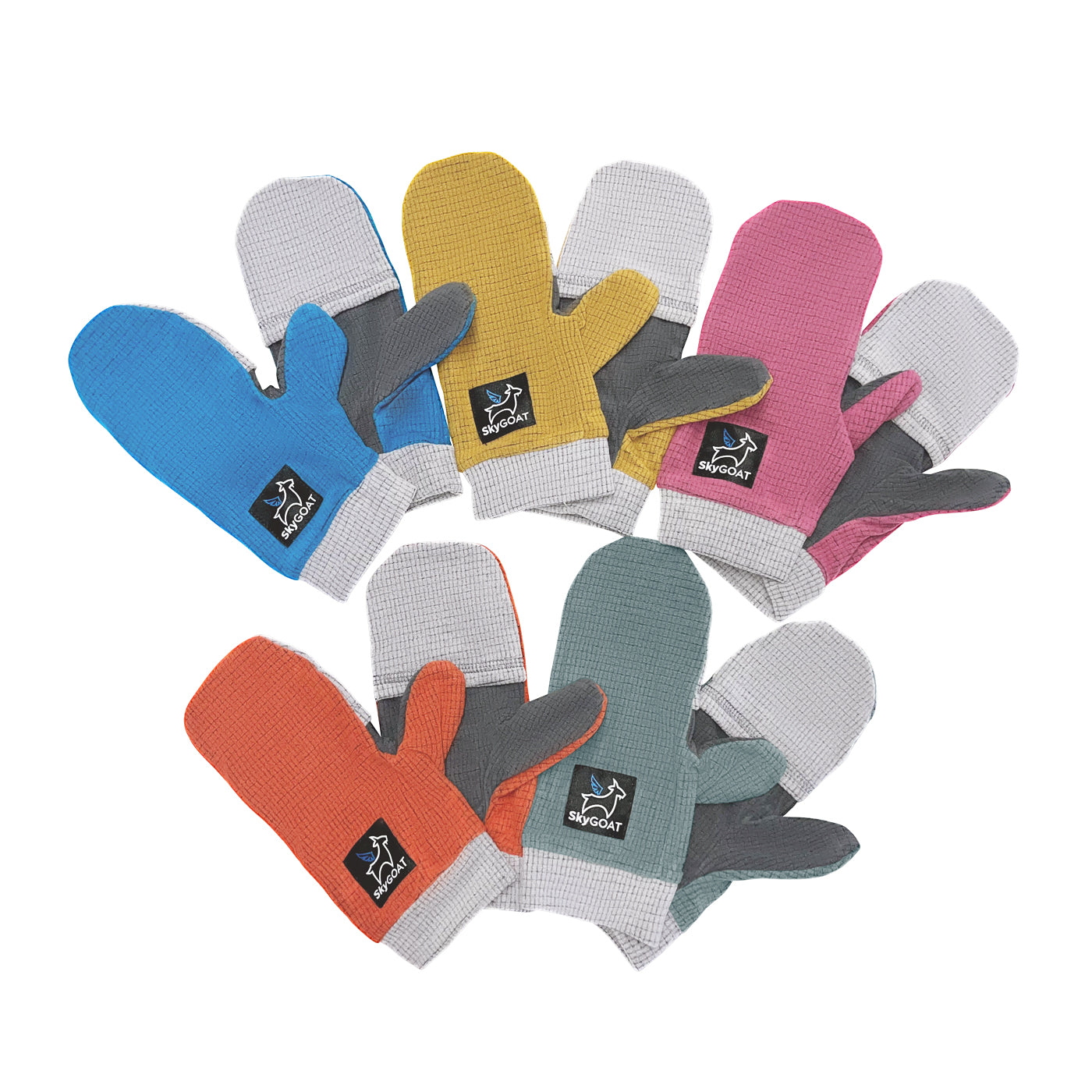

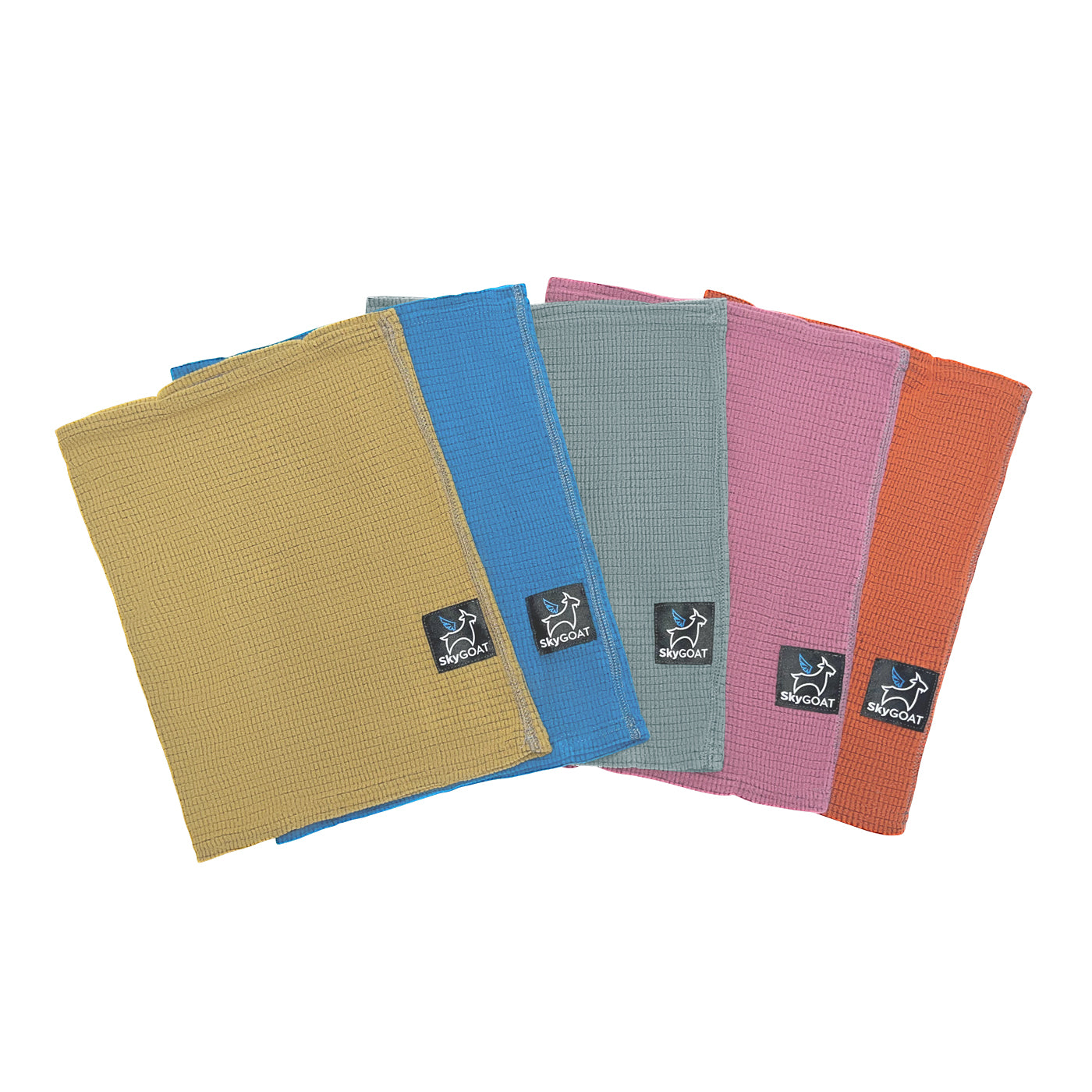



When it comes to layering with a microgrid fleece like SkyGOAT, you aren't just wearing a sweater, you’re managing a micro climate.
The grid structure acts like a thermostat: the "blocks" trap heat, while the "channels" allow moisture to move through. Because SkyGOAT uses a tapered "athletic" cut, it is specifically designed to function as a mid-layer without the "saggy-baggy" bunching that makes shells uncomfortable.
Here is how the models compare when integrated into a full layering system.
Layering Strategy Comparison
|
Feature |
CAMP Hoodie (170 gsm) |
CAMP Jacket (170 gsm) |
Ultralight 115 (115 gsm) |
|
Position |
Primary Mid-layer |
Versatile Mid or Outer |
Lightweight Mid or Base+ |
|
Over a Base Layer |
Best over thin merino or synthetic tees. |
Great over anything; easy to vent. |
Can be worn next-to-skin or over a thin t-shirt or tank. |
|
Under a Shell |
Comfortable, but watch for "hood bulk" if your shell is tight. |
Easiest to manage; the full zip helps regulate shell "swampiness." |
The "invisible" layer; adds warmth without changing how your shell fits. |
|
Under a Puffy |
Very warm; traps significant air for static activities. |
Excellent for transition periods (e.g., stopping for lunch). |
Best for active use under a puffy in moderate cold. |
|
Wind Resistance |
Moderate (needs a shell in moderate & high wind). |
Moderate (needs a shell in moderate & high wind). |
Low (highly breathable / porous). |
Key Considerations for Your System
1. The "Bulk Factor" and Sizing
SkyGOAT's athletic cut means the sleeves and torso are trimmer than a standard hoodie.
-
If you layer under it: If you plan to wear a thick base layer (like a 250-weight merino), you should size up one full size.
-
If you layer over it: Because of the SkyGOAT athletic fit, an item in your normal size should not be baggy and should fit nicely (as designed) under a shell or puffy.
2. Managing Moisture (The "sweat" Effect)
The 115 gsm Ultralight Half-Zip Pullover is the winner for high-exertion (hiking uphill with a pack). Because it is so thin, it moves moisture away from your body and out the top or to your outer shell faster.
-
Pro Tip: If you're wearing the CAMP Hoodie (170 gsm) under a waterproof shell while moving fast, you may heat up and sweat. If you sweat heavily, the CAMP Jacket is better because you can unzip the front to let the moisture escape the system entirely.
3. Static vs. Active Warmth
-
Static (Standing still/Camp): The 170 gsm (Hoodie/Jacket) is superior. The deeper grid blocks trap a thicker layer of "dead air," which keeps you warmer when your body isn't generating its own heat.
-
Active (Moving / Hiking): The 115 gsm Half-Zip is the sweet spot. It provides just enough "edge" against a chill without causing the "sweat-chill" cycle that happens when you over insulate while moving.
4. Hood Options
-
Hoodie: Has a hood with a "crossover" style neck.
-
Jacket & Half-Zip: Attached at the base of the collar, so if the hood isn't in use, it's out of the way. Hood includes a thin elastic trim for a fitted look and feel and to keep the breeze out
-
NO Hood: You can also get a Jacket or Ultralight 115 in a NO Hood version. This allows for easier layering when you plan to use a hood from a base or outer layer in your layering plan.
Final Recommendation based on Layering:
-
Choose the CAMP Hoodie if this is your main insulation for 3-season backpacking and you want a cozy piece for the sleeping bag.
-
Choose the CAMP Jacket if you use a tight-fitting rain shell and need to be able to dump heat quickly without taking layers off.
-
Choose the Ultralight 115 if you are a "fast and light" hiker who usually wears a sun hoodie and just needs a "booster" layer that won't make you sweat through your clothes.
-
Choose any of the above for looking good and keep cozy while around the campfire, on the couch or at your local watering hole!